Q1
Two charges 5 × 10⁻⁸ C and -3 x 10⁻⁸ C are located 16 cm apart from each
other. At what point (s) on
the line joining the two charges is the electric potential zero? Take the potential at infinity to
be zero.
solutions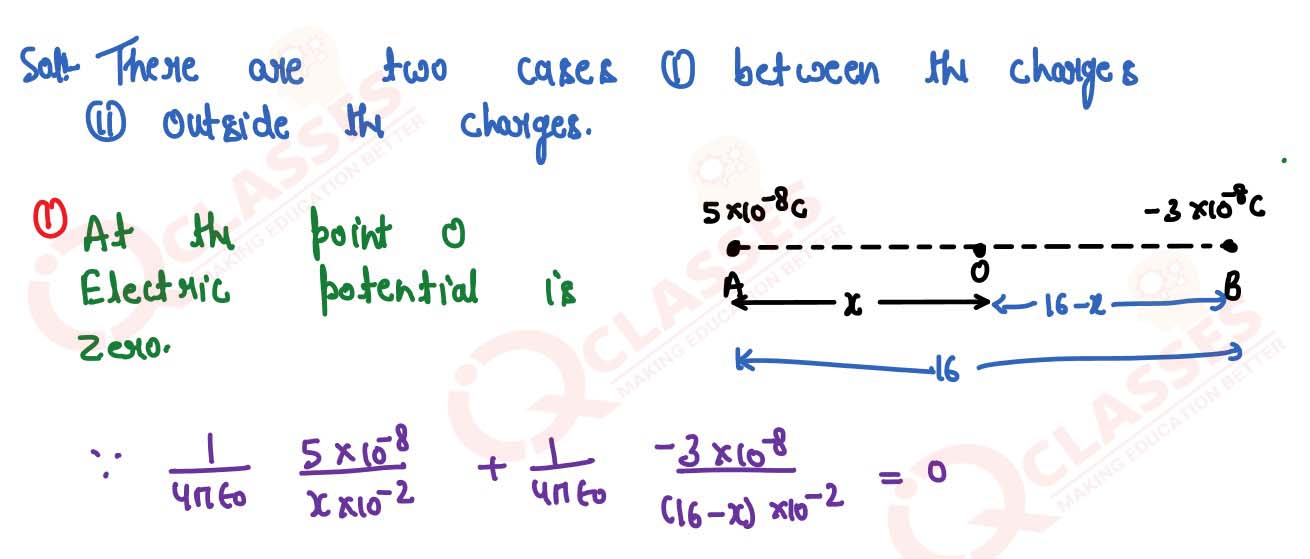

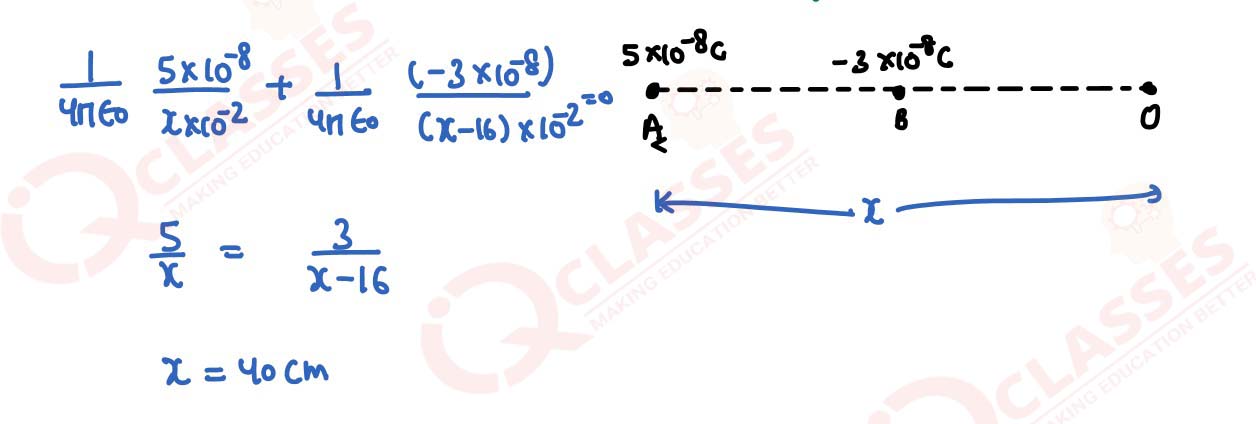
solutions
Q2
A regular hexagon of side 10 cm has a charge of 5 µC at each of its vertices. Calculate the
potential at the centre of the hexagon.
solutions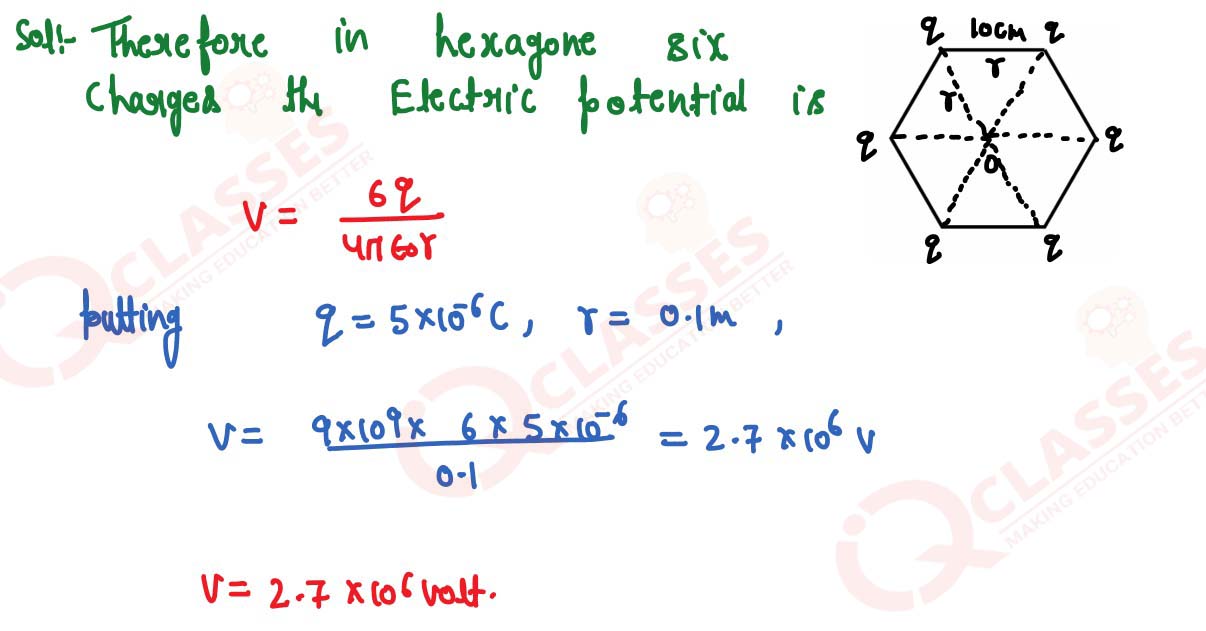
solutions
Q3
Two charges, 2 µC and -2 µC, are placed at points A and B, 6 cm apart.
(1) Identify the equipotential surface of the system.
(2) What is the direction of the electric field at every point on this surface?
solutions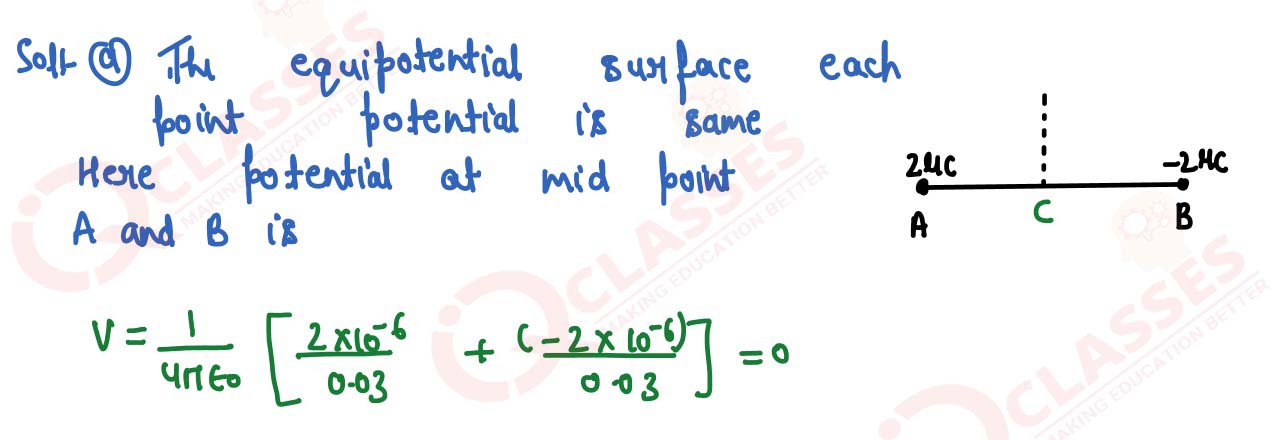
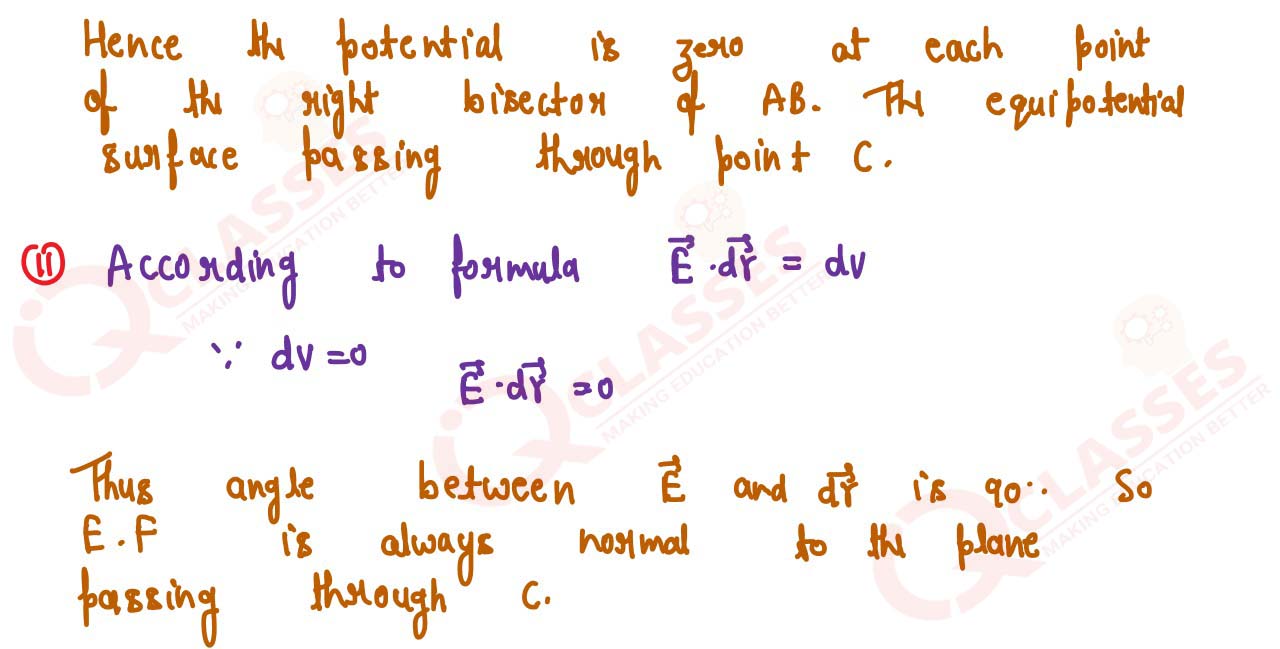
(1) Identify the equipotential surface of the system.
(2) What is the direction of the electric field at every point on this surface?
solutions
Q4
A spherical conductor of radius 12 cm has a charge of 1.6 x 10⁻⁷C distributed uniformly
on its
surface. What is the electric field
(1) inside the sphere?
(2) just outside the sphere?
(3) at a point 18 cm from the centre of the sphere?
solutions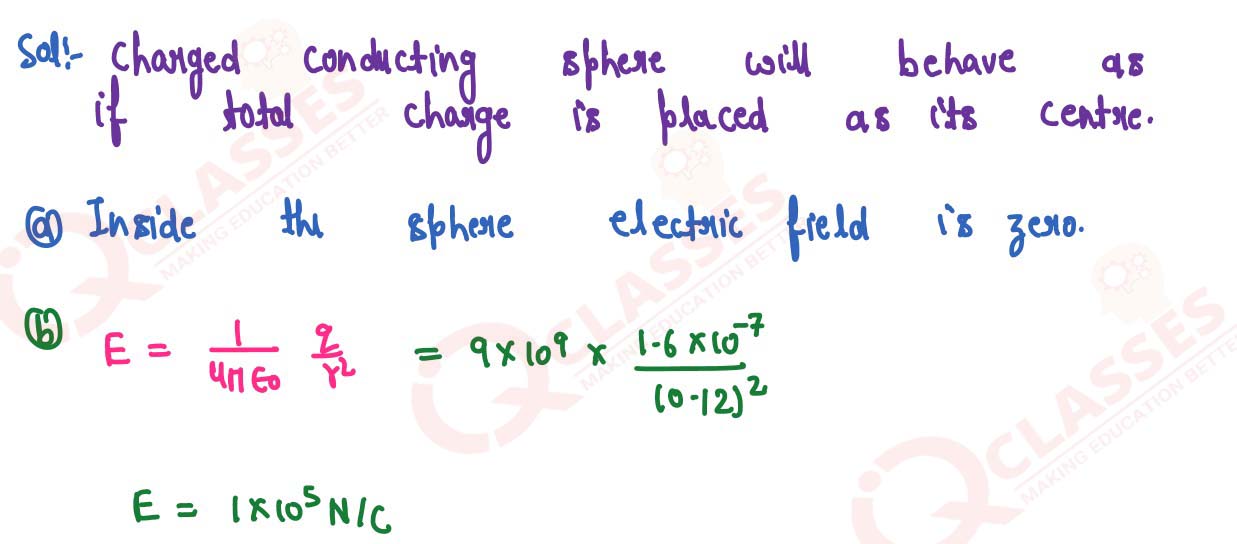

(1) inside the sphere?
(2) just outside the sphere?
(3) at a point 18 cm from the centre of the sphere?
solutions
Q1
A parallel plate capacitor with air between the plates has a capacitance of 8pF (1pF = 10-12 F. What
will be the capacitance if the distance between the plates is reduced by half and the space between
them is filled with a substance of dielectric constant 6?
solutions

solutions
Q6
Three capacitors connected in series have a capacitance of 9pF each.
(1) What is the total capacitance of the combination?
(2) What is the potential difference across each capacitor if the combination is connected to a 120 V supply?
solutions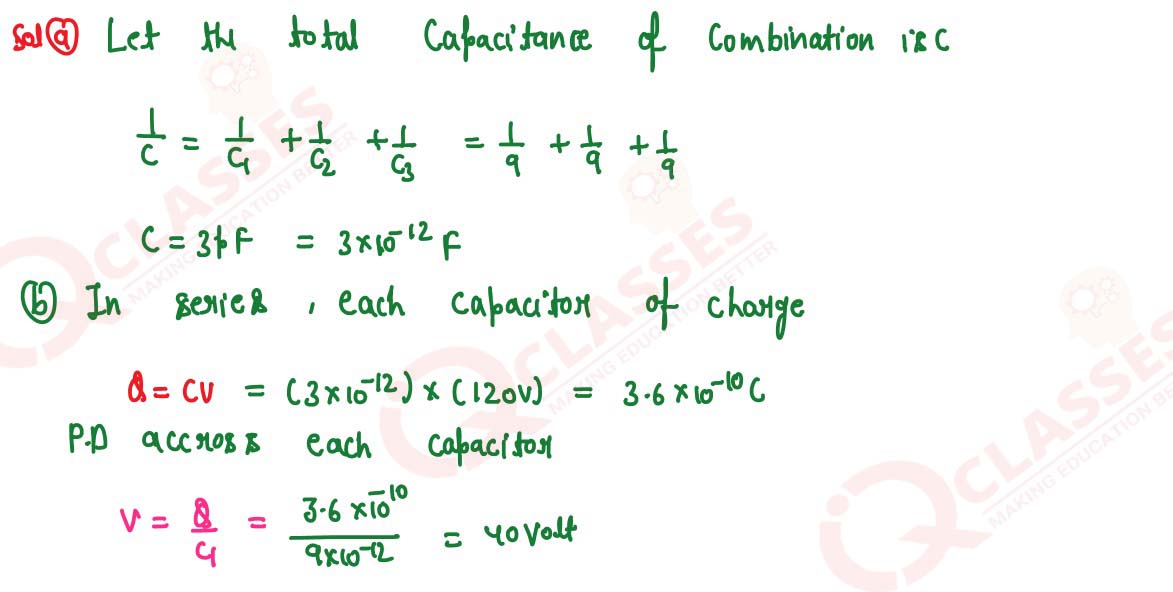
(1) What is the total capacitance of the combination?
(2) What is the potential difference across each capacitor if the combination is connected to a 120 V supply?
solutions
Q7
Three capacitors of capacitances 2 pF, 3 pF and 4 pF are connected in parallel.
(1) What is the total capacitance of the combination?
(2) Determine the charge on each capacitor if the combination is connected to a 100 V supply.
solutions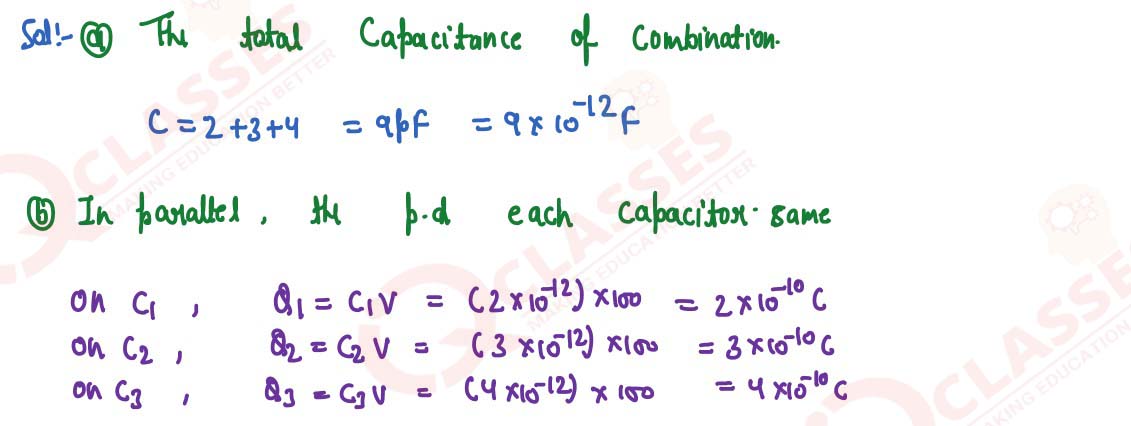
(1) What is the total capacitance of the combination?
(2) Determine the charge on each capacitor if the combination is connected to a 100 V supply.
solutions
Q8
In a parallel plate capacitor with air between the plates, each plate has an area of 6 x 10⁻³ m 2
and the distance between the plates is 3 mm. Calculate the capacitance of the capacitor. If this
capacitor is connected to a 100 V supply, what is the charge on each plate of the capacitor?
solutions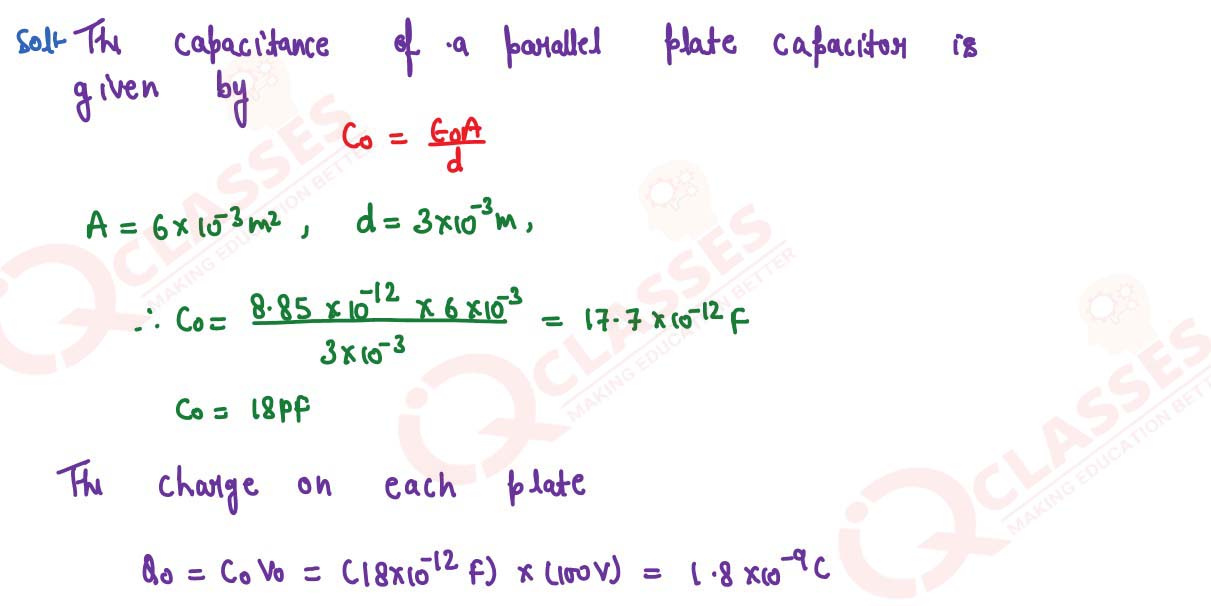

solutions
Q9
Explain what would happen if, in the capacitor given in Exercise 2.8, a 3 mm thick mica sheet (of
dielectric constant = 6) were inserted between the plates,
(a) while the voltage supply remained connected.
(b) after the supply was disconnected.
solutions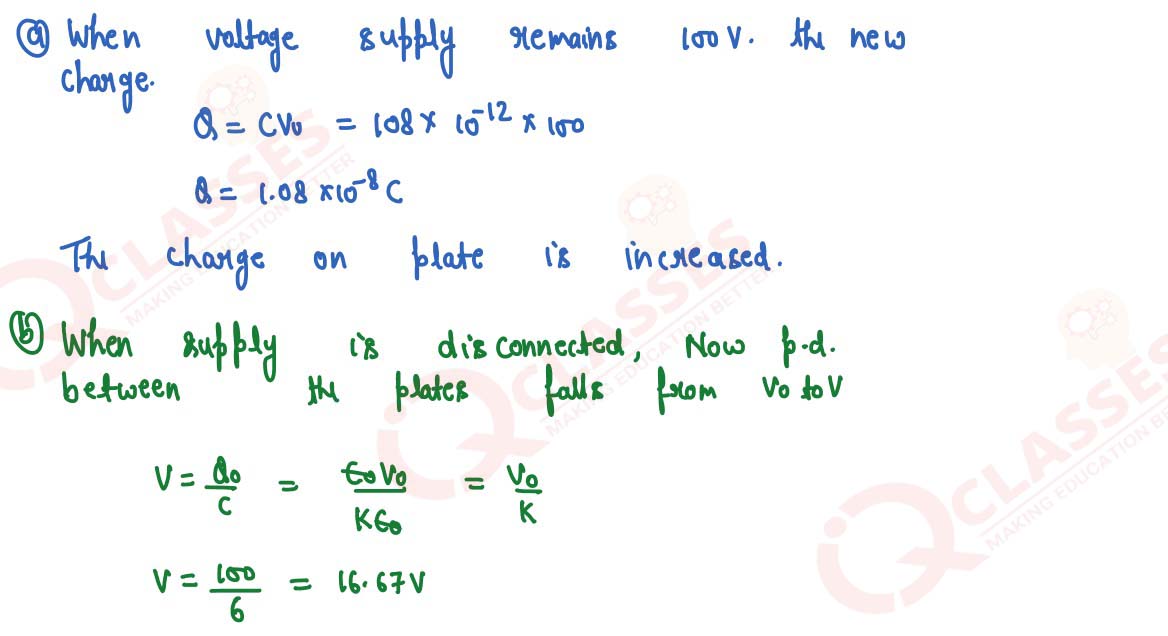
(a) while the voltage supply remained connected.
(b) after the supply was disconnected.
solutions
Q10
A 12pF capacitor is connected to a 50V battery. How much electrostatic energy is stored in the
capacitor?
solutions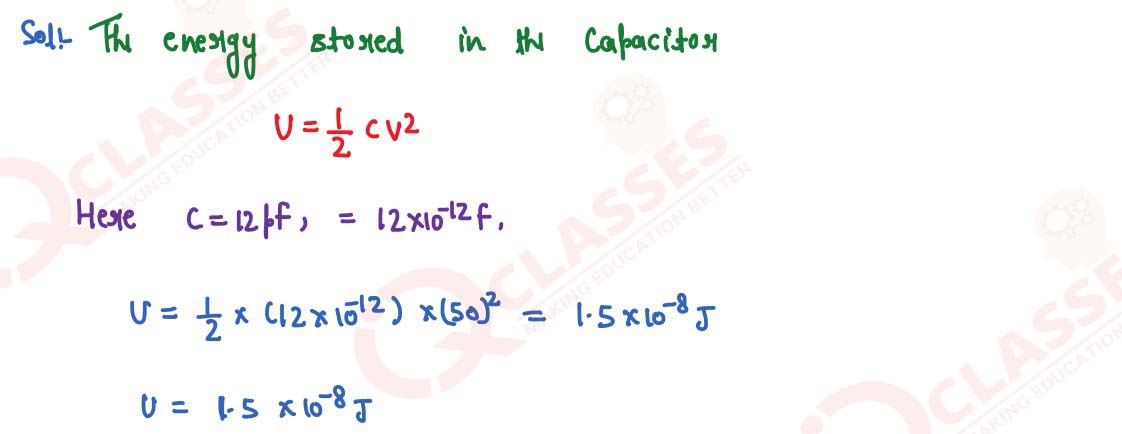
solutions
Q11
A 600pF capacitor is charged by a 200V supply. It is then disconnected from the supply and connected
to another uncharged 600 pF capacitor. How much electrostatic energy is lost in the process?
solutions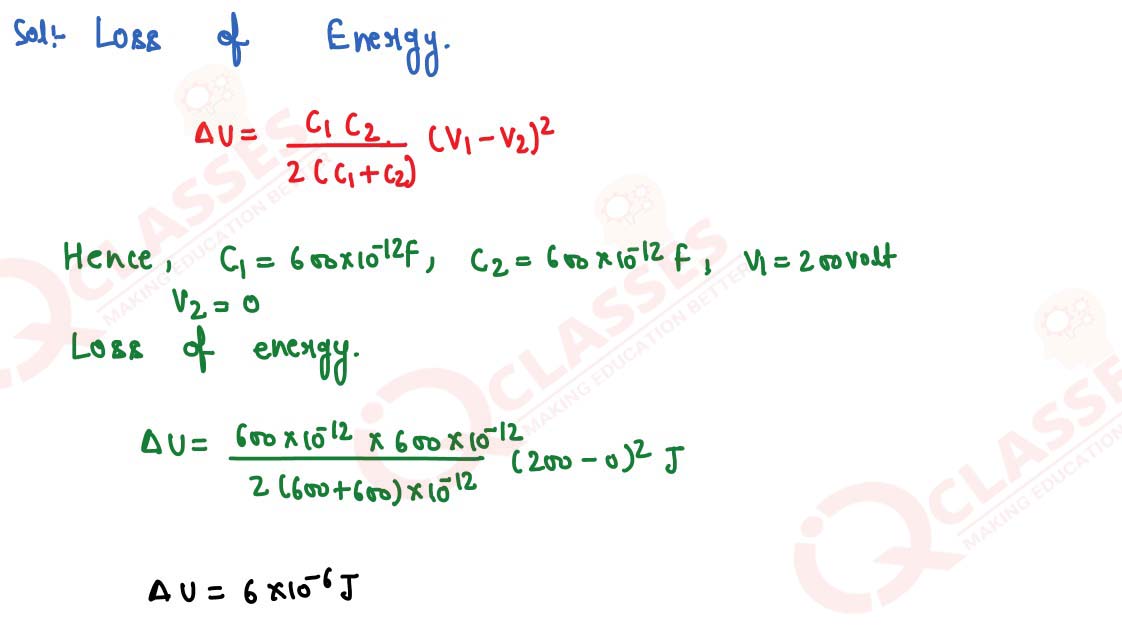
solutions